Bisniucoebeoki
Circuit board art community
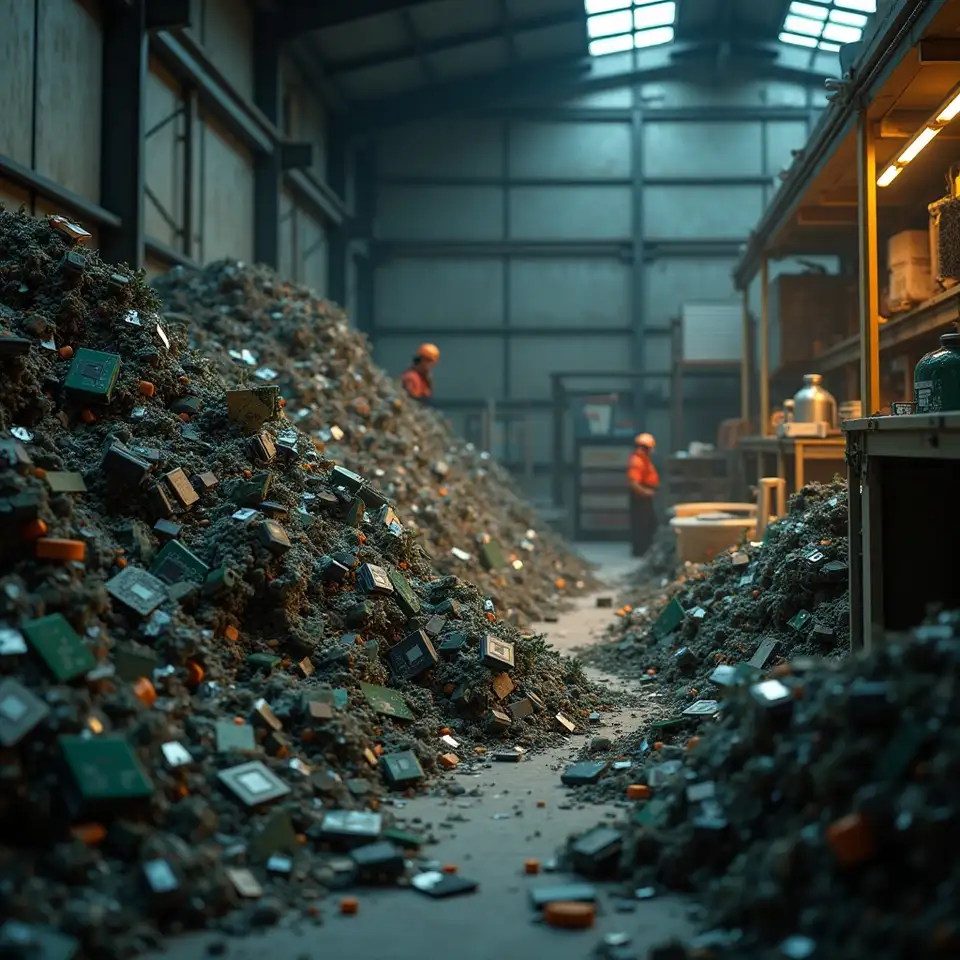
Most discarded circuit boards travel from drawer to bin to landfill, leaching heavy metals into surrounding soil and groundwater for decades
Disposing of electronics responsibly is harder than most people assume. Kerbside recycling does not accept circuit boards in most Australian states. Dedicated e-waste drop-offs exist but are underused. The result is that a significant proportion of end-of-life electronics — motherboards, controller cards, industrial panels — ends up in general waste, where the lead, cadmium, and brominated flame retardants embedded in the substrate and solder joints degrade slowly and unevenly into surrounding material. Circuit board art does not solve the e-waste problem at scale. What it does is redirect individual boards away from that outcome, transform them into finished objects worth keeping, and document the process so that more people can do the same. The environmental contribution is modest and specific, and this community describes it in those terms rather than larger ones it cannot support.
Every project begins with material already at end of life — not purchased new to supplement a preferred aesthetic.
Sealants, resins, and adhesives are compared each year against low-VOC and water-based alternatives that perform reliably on board substrates.
The community directory lists recycling drop-offs, repair cafés, and decommissioned-equipment suppliers so salvage remains practical, not aspirational.
The community does not claim to address e-waste at scale — it documents what individual practitioners can do with the boards already available to them.
Australia generates a substantial volume of electronic waste each year, and circuit boards represent one of the more chemically complex categories within that stream. The fibreglass substrate, the solder joints, and the component housings each carry materials that require controlled conditions to recover safely — conditions that general waste processing does not provide. When boards reach landfill, the recovery of those materials becomes practically impossible, and the compounds they contain begin to interact with surrounding waste in ways that are difficult to monitor or contain over time. Recycling programmes for e-waste exist across Australian cities, and their reach has expanded in recent years. Even so, a meaningful share of end-of-life electronics does not reach them. The gap between available infrastructure and actual diversion rates is where individual practice — including circuit board art — finds its clearest environmental justification. Redirecting a single board is a small act. Documenting how to do it, and building a community that normalises the practice, compounds that act across many practitioners over time.
The case for upcycling
A framed circuit board panel is not a neutral object. Its origin is legible in its surface — the component array, the trace geometry, the manufacturer markings that remain visible under clear sealant. That legibility makes the piece a conversation about material reuse in a way that work made from conventional art materials cannot be, regardless of how it is framed or described.
Approximate annual global electronic waste generated, according to recent international monitoring reports
Estimated annual electronic waste generated within Australia, including consumer and commercial devices
Salvaged boards documented in community gallery submissions, technique guides, and sourcing records to date
States represented in the community sourcing directory, covering major recycling and salvage access points
Documented technique applications across community tutorials, covering cutting, finishing, and mounting approaches

The community's sourcing-first position is not a preference — it is a structural condition of the practice. Gallery submissions require sourcing documentation. Technique guides begin with material assessment. The community directory maps recycling drop-offs, repair cafés, and decommissioned-equipment suppliers across Australian states so that salvage remains a practical first step rather than an aspirational one. When a practitioner cannot source a board through existing channels, the community forum is where that problem is worked through collectively, not bypassed by purchasing new material.
Pre-RoHS circuit boards — manufactured before approximately 2006 — contain lead-based solder that requires careful handling during cutting and finishing. The community's safety documentation covers ventilation requirements, appropriate respiratory protection for fibreglass dust, and the disposal of sanding and cutting residue. Low-VOC sealants are recommended as standard, and the annual finishing product comparison maintained by the community's sustainability researcher ensures those recommendations reflect currently available options rather than products tested years earlier under different formulations.
The community's approach to knowledge sharing reflects a broader position about how craft practice relates to resource use. Technique documentation is shared without restriction. The sourcing directory is open to all members. Gallery curation criteria are published so that any member can understand what is required before submitting. These choices are not incidental — they reflect a view that a practice built around material reuse should also build around knowledge reuse, and that keeping useful information behind barriers contradicts the circular logic that motivates the work in the first place.
Growing steadily